

Quick answer: Paper is a thin sheet made from plant fibres, mostly cellulose from wood or recycled paper. The fibres are broken into pulp, mixed with water, spread on a moving mesh, then pressed and dried. Most paper also contains fillers such as calcium carbonate or clay, plus starch for strength.
This guide explains what paper is, what it is made of, how mills make it, the main types and GSM grades, and where the global industry stands today. Around the world, mills produced 430.9 million tonnes of paper and board in 2024, 3.7% more than the year before (Cepi Key Statistics 2025, using Fastmarkets data).
What Is Paper? A Simple Definition
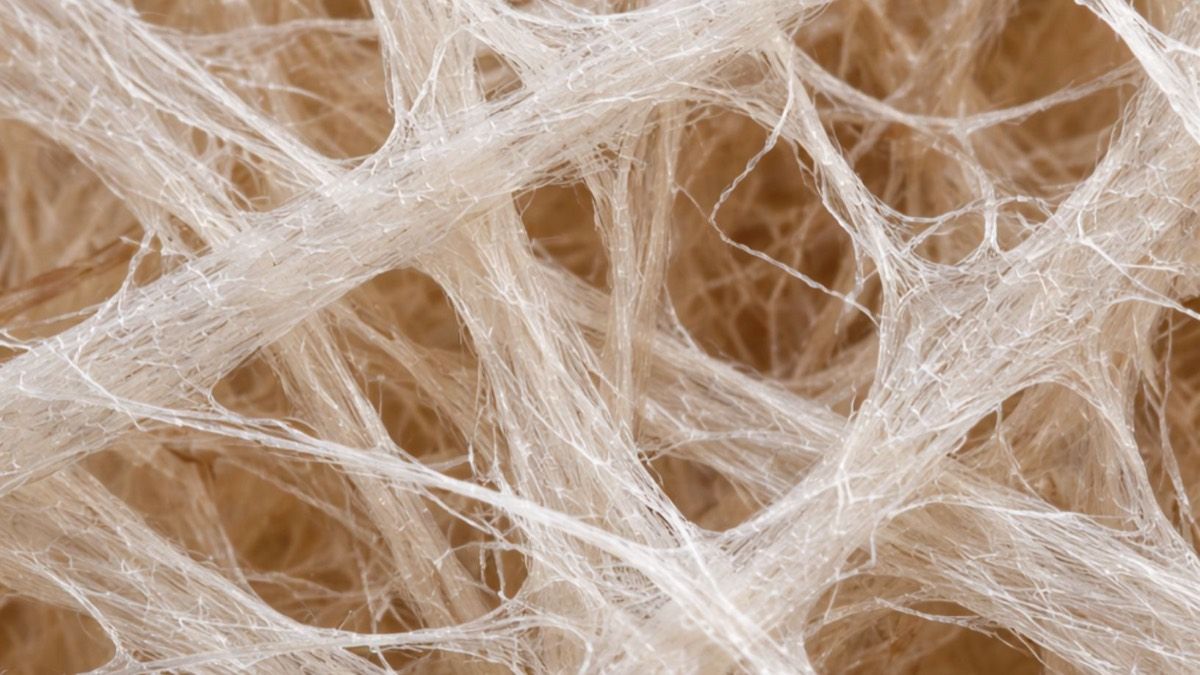
Paper is a sheet material made of cellulose fibres bonded together by pulping, pressing and drying. The fibres usually come from wood, but cotton, bamboo, bagasse (sugarcane waste), hemp and recycled paper all work too.
What separates paper from other sheet materials is the way it is built. The plant material is broken down, mechanically or chemically, into a pulp of loose fibres. That pulp is diluted with water, drained on a mesh screen, and pressed and dried into an even sheet. As the water leaves, the fibres lock together through hydrogen bonds, so no glue is needed. The result is a new material, not a flattened plant.
For scale, a standard A4 sheet of 80 GSM office paper weighs about 5 grams (0.0624 m² × 80 g/m², WPM calculation).
Paper vs Papyrus: Why Is It Called "Paper"?
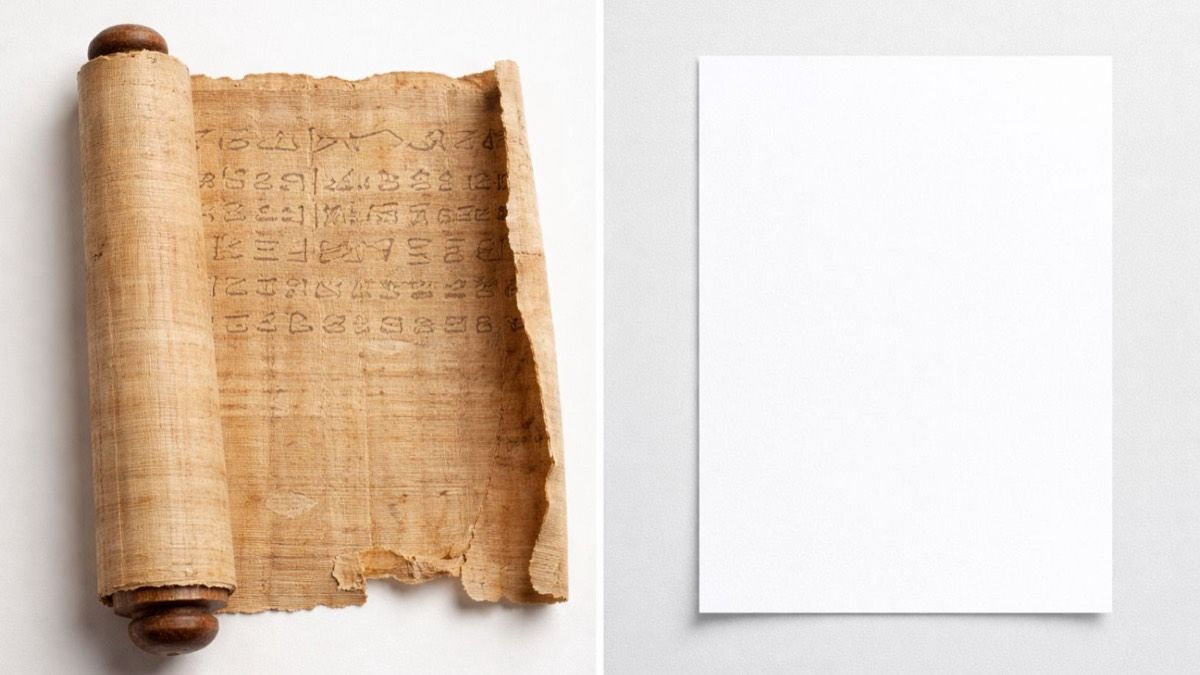
The English word "paper" comes from the Latin papyrus, which comes from the Greek papyros, the name of the Cyperus papyrus plant of ancient Egypt. The name carried over, but the two materials are made in completely different ways.
Dates are approximate and based on archaeological evidence.
Papyrus keeps the plant strips in their natural form, so it is closer to a laminate. Paper takes the plant apart into single fibres and rebuilds them as a sheet. Historical records credit Cai Lun, an official at the Han court in China, with refining papermaking around 105 AD.
History of Paper: From China to the Modern World
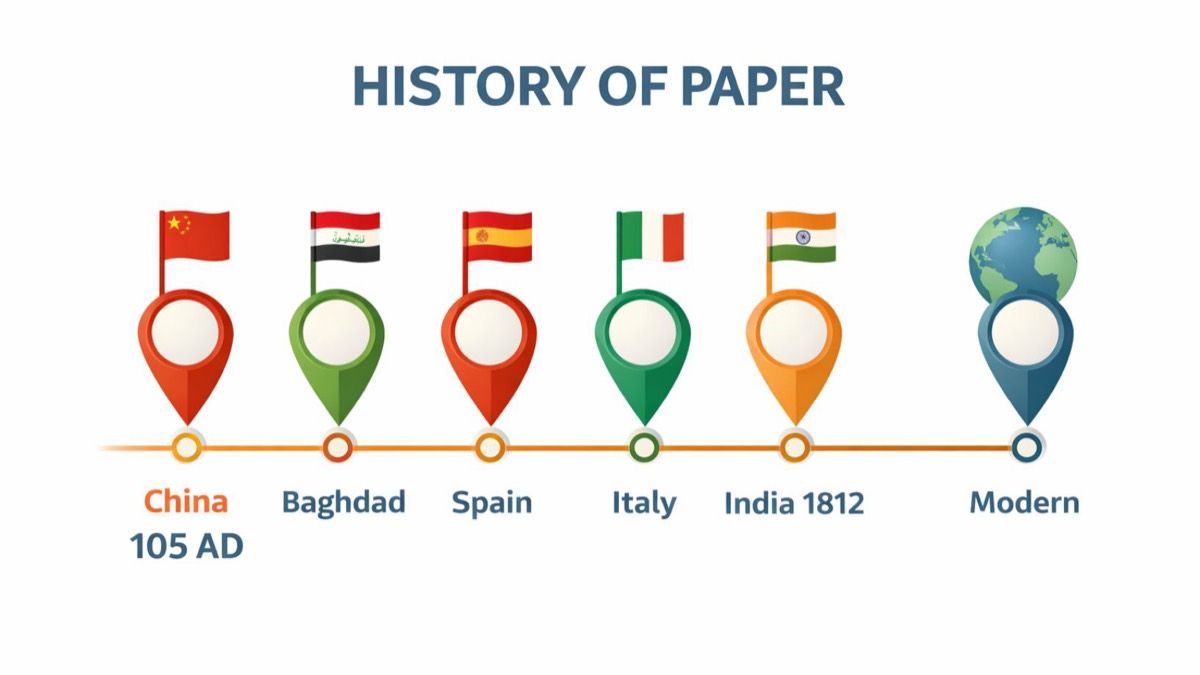
Paper took about 2,000 years to travel from a Chinese court workshop to the global packaging and printing industry of today.
Dates are approximate; historians give slightly different years for some events.
Until the mid-1800s, most paper was made from cotton and linen rags, which kept it scarce and costly. Wood pulp turned paper from a luxury into an everyday material.
First Paper Mill in India
India's first machine-age paper mill opened in 1812 at Serampore (Srirampur) in West Bengal, on the Hooghly River. The Serampore missionaries William Carey, Joshua Marshman and William Ward built it to supply their printing press. It did not last long, because demand for paper was still small.
The next major step came in the 1870s with the Royal Bengal Paper Mills at Ballygunge, Kolkata. Today India makes about 5% of the world's paper, yet each Indian uses only around 16 kg of paper a year against a global average of 57 kg (IPMA industry overview). That gap is why India is one of the fastest-growing paper markets. Read more about the growth of the paper industry in India.
What Is Paper Made Of?
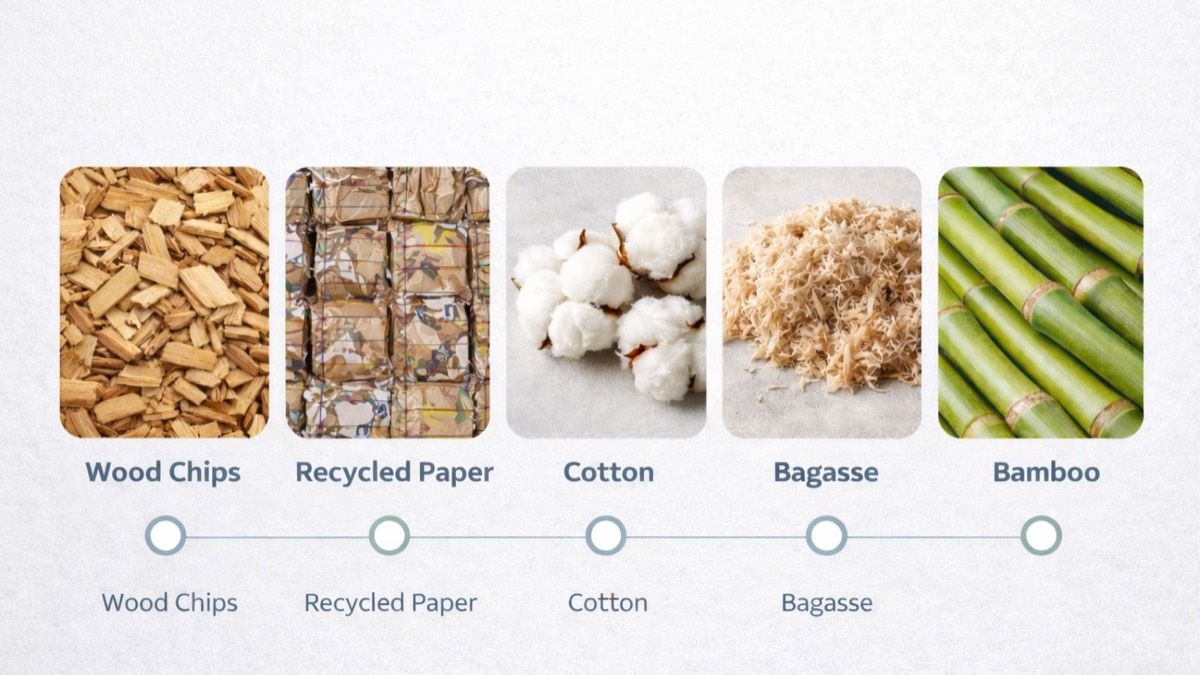
Paper is made of cellulose fibre plus a smaller share of mineral fillers and starch. The fibre comes from three places: virgin wood pulp, recycled paper, and non-wood plants such as bagasse, bamboo or straw. For sourcing details, see our complete raw materials list.
Fibre characteristics are typical trade classifications; real properties vary by species and processing.
Composition of Paper: What a Sheet Actually Contains
A sheet of paper is not pure fibre. European mills, for example, used 88.2 million tonnes of raw materials in 2025, split like this (Cepi Key Statistics 2025, raw materials and non-fibrous materials tables):
Within that non-fibrous share, calcium carbonate made up 54%, starches 19%, clays 16% and other additives 11% (same source).
India's fibre mix leans even harder on recycling. The Indian Paper Manufacturers Association puts it at 74–76% recycled fibre, 18–20% wood and 6–8% agro-residues such as bagasse and straw (IPMA). Counting fibre only, Europe sits near 57% recycled (45.3 Mt of recycled paper against 34.3 Mt of pulp, WPM calculation from Cepi data). So Indian paper is, on average, more recycled than European paper.
Besides fibre and fillers, mills add small amounts of process chemicals:
- Sizing agents such as AKD or ASA make paper resist water, so ink does not bleed
- Fillers such as calcium carbonate and kaolin clay improve brightness, opacity and smoothness
- Starch adds strength and binds the surface
- Retention aids help fine fibres and fillers stay in the sheet during forming
- Bleaching chemicals, such as chlorine dioxide in elemental-chlorine-free (ECF) bleaching or hydrogen peroxide in totally chlorine-free (TCF) bleaching, whiten the pulp
For the full chemical list, see our guide to chemicals used in paper mills.
How Is Paper Made? The 5-Step Process
Modern papermaking follows the same five steps whether the mill makes tissue or heavy packaging board.
Step 1: Pulping
Wood chips, recycled paper or other fibres are turned into pulp in one of two ways:
- Mechanical pulping grinds wood against a stone or between metal discs. It keeps most of the wood but gives weaker fibres.
- Chemical pulping cooks wood chips in chemicals that dissolve lignin, the natural glue between fibres. It keeps roughly half the wood but gives much stronger fibres. The kraft (sulphate) method dominates: in Europe it made 25.3 of the 27.5 million tonnes of chemical pulp produced in 2025, about 92% (Cepi Key Statistics 2025).
See our detailed comparison of chemical vs mechanical pulping.
Step 2: Cleaning and Screening
The pulp is cleaned of sand, grit, ink (in recycled pulp), plastic and other contaminants using screens and centrifugal cleaners. If the mill needs white paper, the pulp is bleached at this stage.
Step 3: Forming
The clean pulp, now more than 99% water, is sprayed onto a fast-moving wire mesh. Water drains away and the fibres settle into a wet web. This happens on a Fourdrinier or a cylinder mould former.
Step 4: Pressing and Drying
The wet web passes through heavy press rolls that squeeze out water. It then runs over a long series of steam-heated cylinders that dry it to a few percent moisture.
Step 5: Finishing
The dry sheet is calendered between smooth rolls for even thickness and a smoother surface. Depending on the grade, it is then coated (glossy magazine paper), embossed (textured stationery) or left uncoated (copy paper), and wound onto reels.
For a stage-by-stage breakdown with equipment details, see our full guide to the paper production process, or the shorter overview of the paper making process.
For the full industrial picture, from raw materials to plant setup, see our complete guide to paper manufacturing.
Types of Paper and GSM Grades
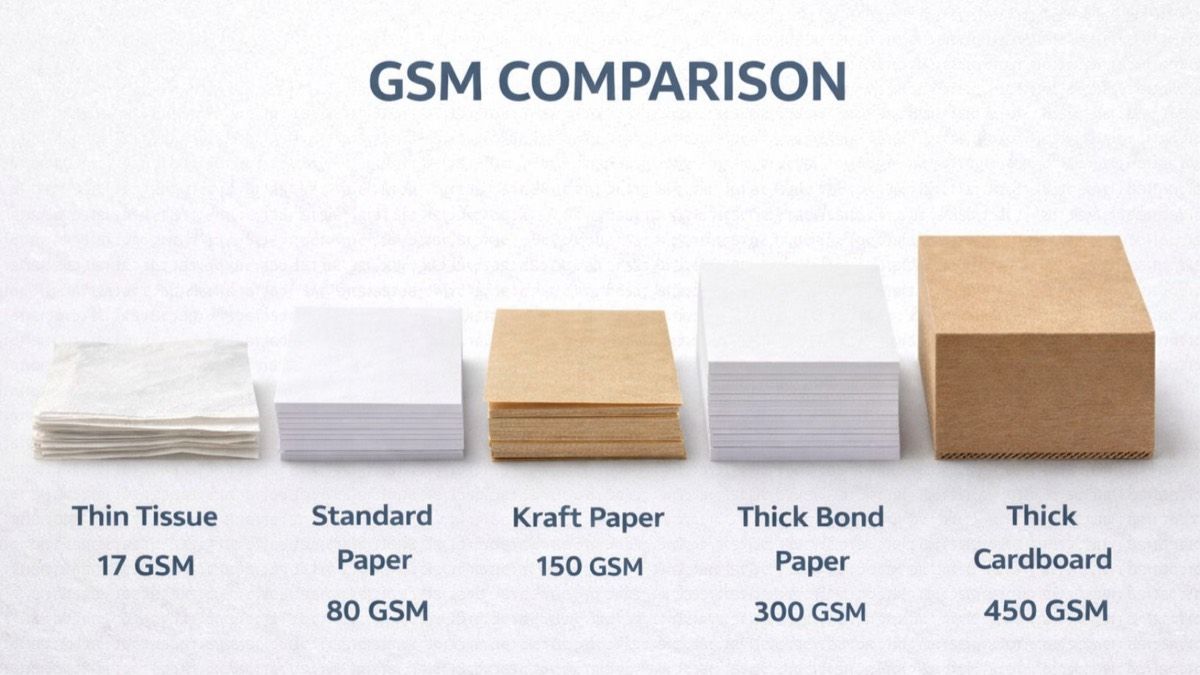
Paper is graded by use and by weight. Weight is measured in GSM (grams per square metre), the mass of a 1 m × 1 m sheet.
ISO 536 sets how grammage is measured; the ranges above are typical trade values and differ by manufacturer.
How to Choose the Right GSM
- Under 80 GSM: light grades for newspapers, receipts and tissue
- 80–120 GSM: standard office paper and letters
- 120–200 GSM: flyers, posters and book covers
- 200–350 GSM: business cards, postcards and premium packaging
- 350+ GSM: board grades for rigid packaging
Hold 80 GSM and 120 GSM side by side and the difference is obvious. The heavier sheet feels more solid, curls less and prints sharper.
Paper Industry Today: Key Statistics
The global paper industry is still growing, carried by packaging even as printing paper shrinks.
Global Production and Where It Comes From
Source: Cepi Key Statistics 2025, global view, based on Cepi and Fastmarkets data.
A few other numbers worth knowing:
- Consumption: the world used 433.8 million tonnes of paper and board in 2024 (Cepi Key Statistics 2025)
- Pulp: wood pulp output rose 3% to 189 million tonnes in 2024 (FAO, December 2025)
- Recovered paper: global use of recovered paper rose 1% to 243 million tonnes in 2024 (same FAO release)
- Europe: Cepi member countries produced 77.4 million tonnes in 2025, down 1.6% on 2024 (Cepi Key Statistics 2025)
China is by far the largest single producer. For the full country ranking, see our list of the top pulp and paper producing countries.
India's Paper Industry
India accounts for about 5% of world paper output, and its per capita use of around 16 kg is far below the 57 kg global average (IPMA). Packaging and tissue are the fastest-growing segments. Market size, capacity and investment trends are covered in our guide to the growth of the paper industry in India.
Recycling and Environmental Impact
- Europe: 76.4% of all paper and board consumed in Europe was recycled in 2025, unchanged from 2024 (Cepi Key Statistics 2025)
- USA: the paper recycling rate was 60–64% in 2024, with about 46 million tons recycled (AF&PA)
- Water: European mills took in 3,160 million m³ of water in 2024, and around 90% went back to its source after treatment (Cepi Key Statistics 2025). That works out to roughly 40 m³ of intake per tonne of paper and board (WPM calculation)
- Carbon: European mills emitted 0.22 tonnes of direct CO₂ per tonne of product in 2025, down from 0.54 in 1991 (Cepi Key Statistics 2025)
Is Paper a Raw Material or a Finished Product?
Paper is both. For a paper mill it is the finished product. For many other industries it is a raw material:
- Packaging makers turn it into corrugated boxes and cartons
- Printers turn it into books, newspapers and magazines
- Tissue converters turn parent reels into toilet rolls, napkins and towels
- Specialty makers use it for filters, medical wipes and insulation
That is why industrial classifications usually treat paper as a semi-finished product: a manufactured material that becomes the input for further manufacturing.
Machine-Made Paper vs Handmade Paper
Machine-made paper comes from paper mills that run around the clock, forming, pressing and drying one continuous web. To see how the whole chain fits together, from stock preparation to the finished reel, read how a paper mill works.
Handmade paper is formed one sheet at a time with a mould and deckle, a frame holding a mesh screen. Each sheet is formed, pressed and dried by hand. People value it for:
- Its texture and natural deckle edges
- Even strength in every direction, because the fibres lie randomly
- Art, certificate and luxury stationery uses
India has a strong handmade paper tradition, with centres at Sanganer near Jaipur and in Pondicherry, and the Khadi and Village Industries Commission (KVIC) supports it as a village industry.
From the Mill Floor: What Really Decides Paper Quality
Definitions explain what paper is. Paper makers care about why one sheet behaves differently from another. Ask any paper technologist and the answer comes back to a handful of trade-offs that every mill balances on every shift.
Refining is a trade-off between strength and speed. Before forming, pulp is refined: the fibres are beaten so their surfaces fray into fine fibrils that bond better. More refining gives a stronger, denser sheet, but the pulp also holds water longer, so it drains more slowly on the wire. Push refining too far and the machine has to slow down.
Fillers save fibre but cost strength. Calcium carbonate and clay are cheaper than fibre and make paper brighter and more opaque. Every filler particle sits between fibres, though, and weakens the bonds. That is why mills add starch and retention aids alongside fillers rather than simply loading the sheet with more mineral.
Recycled fibre wears out. Each time paper is pulped again, its fibres get shorter and stiffer, and they bond less well. A recycled sheet can still be very good, but most mills blend in some virgin pulp to keep strength up, especially for packaging that has to carry weight.
Drying is where the energy goes. Water that the press section squeezes out mechanically never has to be evaporated in the steam-heated dryers. Mills therefore fight hard for every bit of extra press dryness, because it cuts steam use and lets the machine run faster. For more on the equipment behind each step, see our paper mill equipment list.
Paper has a grain. On a paper machine most fibres line up in the direction the web travels. You can test this yourself: a sheet tears straighter and folds more cleanly along the grain than across it. Printers and box makers plan their cutting around it.
Key Takeaways
- Paper is a sheet of bonded cellulose fibres, made by pulping, forming, pressing and drying, with fillers and starch added for brightness and strength.
- Recycled paper is now the largest fibre source in both Europe and India, while virgin pulp supplies strength and food-contact grades.
- Paper quality comes down to trade-offs: refining against machine speed, fillers against strength, and recycled fibre against virgin fibre.
- The world produced 430.9 million tonnes of paper and board in 2024, more than half of it in Asia (Cepi Key Statistics 2025).
Kertas Adalah: Pengertian Kertas dalam Bahasa Indonesia
Apa yang dimaksud kertas? Kertas adalah bahan tipis berbentuk lembaran yang terbuat dari serat selulosa. Serat tersebut dihancurkan menjadi pulp, dicampur air, disaring di atas kawat, lalu dipres dan dikeringkan.
Secara umum kertas terbuat dari tiga bahan utama: pulp kayu (dari pinus, eukaliptus atau akasia), kertas bekas yang didaur ulang, dan serat non-kayu seperti bagas tebu atau bambu. Selain serat, kertas merupakan bahan yang juga mengandung bahan pengisi seperti kalsium karbonat dan kaolin, serta pati untuk kekuatan.
Produksi kertas dan karton dunia mencapai 430,9 juta ton pada 2024 (Cepi Key Statistics 2025). Lihat proses produksi kertas untuk tahapan teknisnya dan daftar bahan baku kertas untuk semua jenis bahan.
कागज क्या है? (Kagaj Kise Kahate Hain)
कागज (kagaj) सेल्यूलोज फाइबर से बनी एक पतली, सपाट शीट है। इसे लकड़ी की पल्प, बांस, गन्ने की खोई (बगास) या रिसाइकल्ड पेपर से बनाया जाता है। फाइबर को पानी में घोलकर जाली पर फैलाया जाता है, फिर दबाकर और सुखाकर कागज तैयार होता है।
भारत दुनिया के कुल कागज उत्पादन का लगभग 5% बनाता है, और यहाँ प्रति व्यक्ति कागज की खपत लगभग 16 किलो है, जबकि विश्व औसत 57 किलो है (IPMA)। कागज के मुख्य प्रकार हैं: राइटिंग-प्रिंटिंग पेपर, क्राफ्ट पेपर (पैकेजिंग), न्यूज़प्रिंट, टिशू पेपर और स्पेशियलिटी ग्रेड। पूरी जानकारी के लिए देखें कागज उत्पादन प्रक्रिया गाइड।
Sources and References
- Cepi Key Statistics 2025: Confederation of European Paper Industries, July 2026 (world production by region, European raw materials, recycling rate, water, CO₂)
- Global forest products trade and production show signs of recovery in 2024: FAO, December 2025
- IPMA Indian paper industry overview: Indian Paper Manufacturers Association
- How Much Paper Was Recycled in 2024?: American Forest & Paper Association, 2025


